Table of Contents
Enterprise API Testing Strategy | Microservices & Hybrid QE | Sandhata
Application Programming Interfaces (APIs) have become the foundational building blocks of modern digital enterprises. Whether a bank processes an instant mobile payment, an insurer calculates a real-time policy quote, or a telecommunications provider activates a new customer subscription, hundreds of internal microservices and external partner APIs coordinate every transaction behind the scenes.
As enterprise organizations adopt cloud-native microservices, Open Banking ecosystems, and hybrid mainframe integration architectures, the number of APIs inside a single company frequently grows into the thousands. Yet despite this rapid API expansion, many enterprises lack a cohesive, organization-wide API testing plan.
Instead, individual development teams test APIs inconsistently using ad-hoc manual collections, disconnected tools, and brittle end-to-end user interface scripts. Without a unified governance and automation blueprint, breaking API schema changes slip into staging, external vendor sandbox outages stall release pipelines, and critical API security vulnerabilities go undetected until production.
An Enterprise API Testing Strategy resolves these systemic risks. Rather than treating API verification as an afterthought, a structured strategy elevates API quality into an automated, shift-left engineering discipline covering contract compliance, functional precision, security resilience, performance scalability, and Service Virtualization across every protocol.
This comprehensive guide explores why ad-hoc API testing fails at enterprise scale, the six foundational pillars of a modern API testing blueprint, and how Sandhata Technologies helps global enterprises build high-velocity, resilient API ecosystems.
Section 1: Why Ad-Hoc API Testing Fails Modern Enterprises
Understanding the structural flaws of fragmented API testing is essential for building a scalable quality engineering architecture.
1.1 Uncoordinated Breaking Schema Changes Across Microservices
In large enterprises, dozens of agile squads build and update interconnected APIs simultaneously. Squad A modifies a customer profile API, renaming a JSON field or tightening a validation rule, without realizing that Squad B’s mobile checkout service relies on that exact field structure.
Because each team tests its own service in isolation using outdated local mocks, both pipelines report passing builds. The breaking incompatibility remains hidden until both services deploy together into shared environments—or live production—causing immediate transaction failures.
1.2 Over-Reliance on Slow, Brittle User Interface Testing
Many organizations invert the Test Automation Pyramid by attempting to validate backend API logic through slow browser user interface tests. User interface tests take hours to run, break whenever front-end page layouts change, and struggle to test negative backend edge cases such as malformed payloads, expired authentication tokens, or boundary database errors.
1.3 External Third-Party Sandbox Bottlenecks and High Fees
Enterprise applications rely heavily on external partner APIs—including payment clearinghouses, credit rating agencies, identity verification providers, and SaaS platforms. Testing against live external sandboxes creates severe delays due to unannounced vendor downtime, strict rate-limit throttling, and expensive per-call sandbox transaction fees.
1.4 Blind Spots Across Asynchronous and Legacy Mainframe APIs
Modern enterprise communication extends far beyond simple RESTful HTTP endpoints. Enterprises rely on GraphQL, high-speed gRPC, asynchronous event streams over Apache Kafka and IBM MQ, and legacy IBM mainframe z/OS Connect APIs. Manual testing tools cannot validate asynchronous event ordering or catch UTF-8 JSON to EBCDIC COBOL translation errors.
1.5 Exposed API Security Vulnerabilities (OWASP API Top 10)
APIs are the primary attack surface for modern cyber threats. Leaving security validation to annual manual penetration tests exposes enterprises to broken object-level authorization, excessive data exposure, injection attacks, and rate-limit bypass vulnerabilities.
Section 2: Core Engineering Pillars of an Enterprise API Testing Strategy
Sandhata Technologies partners with enterprise technology leaders to design and implement holistic API testing strategies built upon six foundational engineering pillars.
2.1 Pillar 1: Shift-Left Contract-First Design and Consumer-Driven Contract Testing
A modern Enterprise API Testing Strategy begins before a single line of backend code is written. Sandhata embeds contract-first API governance using formal OpenAPI, GraphQL, and AsyncAPI specifications.
To prevent breaking updates across agile squads, Sandhata implements Consumer-Driven Contract Testing inside CI/CD pipelines. Every consuming service defines an automated contract specifying the exact requests it sends and responses it expects. Whenever an API provider modifies its codebase, automated contract checks execute in seconds on every pull request—catching incompatible schema changes immediately without needing heavy shared staging environments.
2.2 Pillar 2: Standardized Multi-Protocol Functional Automation
To eliminate tool sprawl across squads, Sandhata standardizes API automation on modern, developer-friendly frameworks such as Playwright API testing and modular code-driven harnesses.
Automated functional suites validate positive workflows, boundary value limits, negative error codes, pagination rules, idempotency keys, and backend database persistence across REST, SOAP, GraphQL, gRPC, and asynchronous Kafka/IBM MQ event streams. By building shared authentication helpers and reusable schema validators, teams write reliable API tests rapidly.
2.3 Pillar 3: API Service Virtualization for Dependency-Free Execution
To ensure automated API tests never stall waiting for incomplete microservices, third-party payment sandboxes, or oversubscribed mainframes, Sandhata integrates API Service Virtualization directly into the testing architecture.
Service Virtualization builds stateful, protocol-accurate virtual replicas of internal and external APIs packaged inside lightweight Docker containers. Engineering teams execute unlimited functional, negative, and load tests twenty-four hours a day with zero external downtime, zero rate limits, zero vendor sandbox fees, and zero mainframe MIPS consumption.
2.4 Pillar 4: Automated OWASP API Security Gates in CI/CD (DevSecOps)
Security validation must be continuous and automated. Sandhata embeds automated API security scanning directly into continuous integration pipelines to enforce OWASP API Security Top 10 protections on every build.
Automated security tests verify OAuth 2.0 and OpenID Connect token validation, test broken object-level authorization by attempting cross-account data access, scan payloads for injection vulnerabilities, verify rate-limit throttling, and ensure sensitive customer fields are never leaked in error stack traces.
2.5 Pillar 5: Continuous API Performance, Latency, and Resilience Validation
Enterprise APIs must remain fast and reliable under peak customer traffic. Sandhata integrates automated API performance benchmarks and chaos fault injection into delivery pipelines.
Automated load runners verify API response latency and throughput against strict Service Level Agreements (SLAs) during major releases. Simultaneously, virtualized fault injection simulates slow downstream responses and intermittent server crashes to verify retry policies, timeouts, and circuit-breaker resilience required by regulations like DORA.
2.6 Pillar 6: Hybrid Mainframe API Validation and Synthetic Test Data
For banks, insurers, and telecom providers operating core IBM Z mainframes, Sandhata ensures seamless hybrid API quality. Automated integration tests validate z/OS Connect REST APIs and CICS web services—verifying JSON-to-EBCDIC COBOL copybook conversions and confirming accurate DB2 ledger updates.
All API test suites run on deterministically masked or synthetic test datasets, eliminating data collisions while guaranteeing complete compliance with GDPR, UK GDPR, and PCI-DSS.
Section 3: Evaluating API Testing Maturity with the Maturity Compass
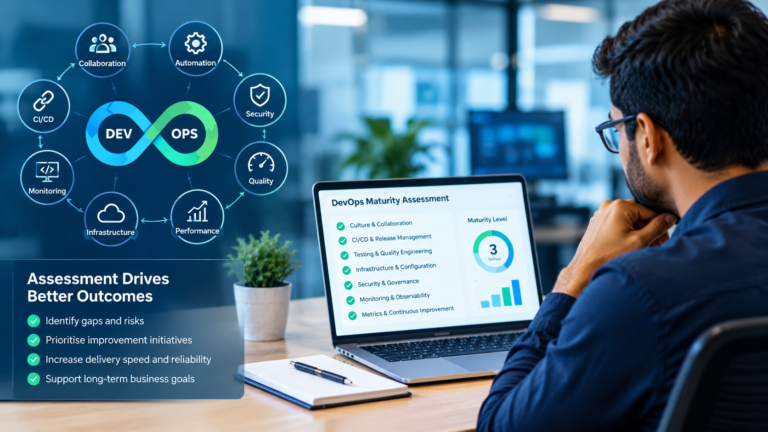
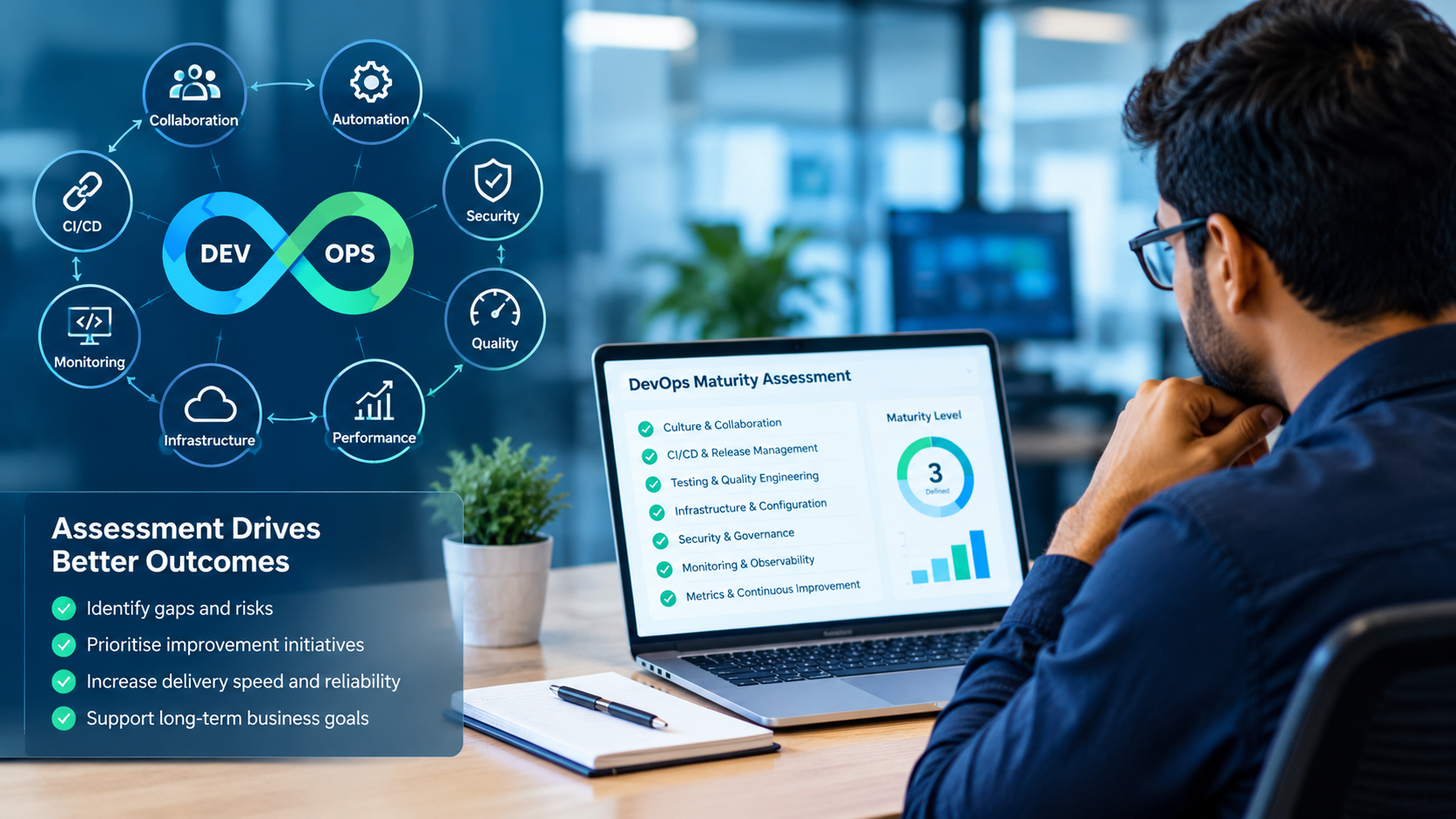
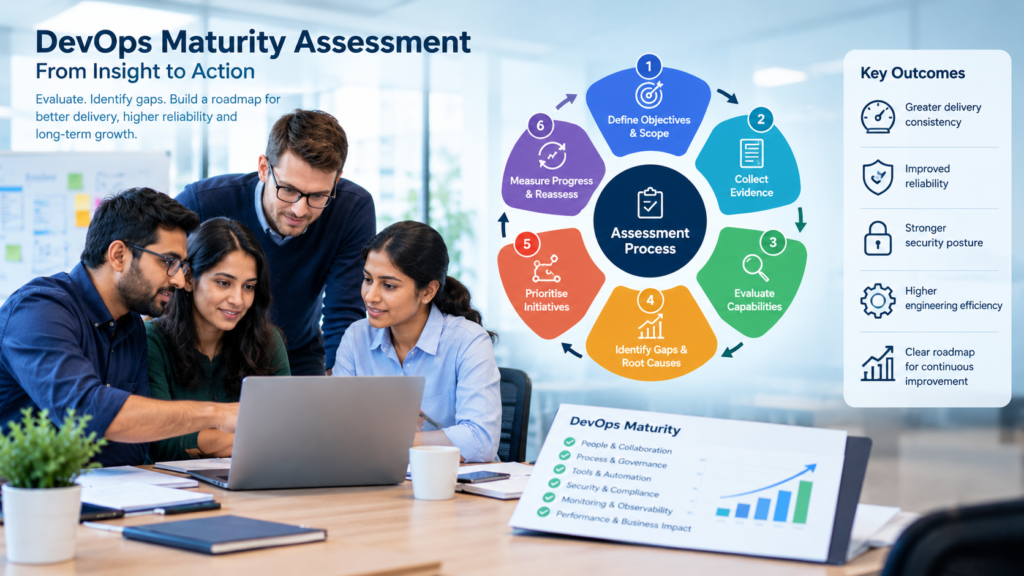
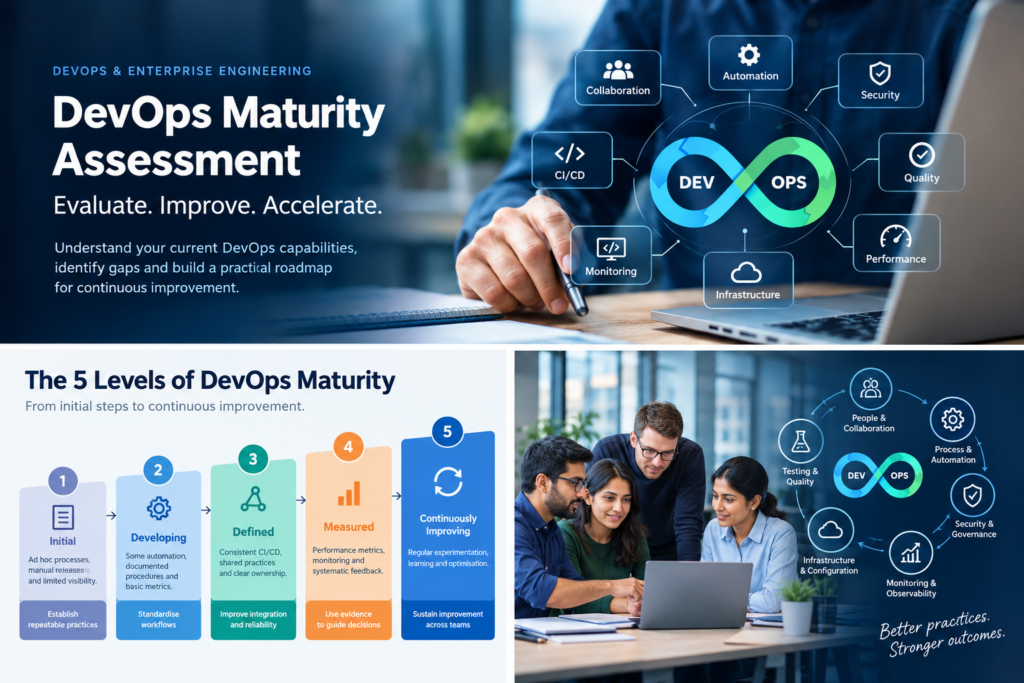
Sandhata applies the proprietary DevOps & SRE Maturity Compass to help technology leaders audit their current API quality practices across 30 to 40 technical, operational, and governance dimensions.
Level 1: Manual Ad-Hoc API Checks. Developers and testers run manual API requests using standalone desktop tools right before releases. API specifications are outdated, breaking changes frequently reach production, and security testing happens manually once a year.
Level 2: Siloed Scripted API Tests. Individual teams write basic automated REST scripts, but asynchronous Kafka/MQ flows, mainframe APIs, and security checks remain manual. Shared staging environments and third-party sandbox outages cause frequent delays.
Level 3: Standardized Contract Testing, Virtualization, and CI/CD Gates. Consumer-driven contract tests run automatically on every pull request. Unified frameworks validate REST, GraphQL, and messaging APIs in CI/CD pipelines, Service Virtualization eliminates external bottlenecks, and automated OWASP security gates enforce compliance.
Level 4: Autonomous Hyperautomated API Quality Engineering. AI-driven hyperautomation via Sandhata’s ATOM2 platform generates test scenarios dynamically from OpenAPI specs, orchestrates ephemeral containerized virtual APIs, runs continuous performance and DORA fault-injection checks, and streams real-time quality telemetry to governance dashboards.
The Maturity Compass provides executive leadership with objective benchmark scores and a clear, phased roadmap for enterprise API transformation.
Section 4: Enterprise Impact – Real-World API Testing Strategy Case Studies
Case Study 1: Global Retail Bank Secures Open Banking and Microservices Ecosystem
A tier-1 global retail bank operated over three hundred internal microservices and external Open Banking APIs connected to core IBM mainframe ledgers. Uncoordinated API updates caused frequent staging outages, manual security reviews delayed API launches by weeks, and external sandbox fees inflated testing budgets.
Sandhata partnered with the bank’s executive leadership to design and implement a unified Enterprise API Testing Strategy. Sandhata established Consumer-Driven Contract Testing across all squads, standardized functional automation on Playwright, virtualized thirty external partner and mainframe APIs, and embedded automated OWASP security gates in Jenkins pipelines.
Breaking API defects reaching staging and production dropped by ninety percent. API regression execution time fell from days to under fifteen minutes, external sandbox fees dropped by eighty-five percent, and API release cycles accelerated from monthly batches to weekly updates.
Case Study 2: Major European Telecommunications Provider Automates Multi-Protocol API Quality
A multinational telecommunications provider relied on REST APIs, GraphQL gateways, and Apache Kafka event streams to power its digital storefront and customer billing engine. Fragile UI tests and missing asynchronous API validation led to recurring order processing errors during peak promotions.
Sandhata engineered a comprehensive API testing architecture combining contract testing, automated Kafka/REST validation, high-concurrency load benchmarks, and Sandhata’s ATOM2 hyperautomation platform.
Automated API test coverage rose from thirty percent to over ninety-two percent, production order-processing defects dropped by eighty-eight percent, and release lead times accelerated by seventy-five percent.
Section 5: Essential Metrics for Enterprise API Testing Strategy Success
Measuring the strategic return on investment of an Enterprise API Testing Strategy requires tracking objective operational metrics across speed, interface reliability, security, and cost efficiency:
API Contract Compliance Rate: Measuring the percentage of microservice providers and consumers protected by automated Consumer-Driven Contract Testing inside pull request pipelines, targeted at 100 percent.
API Defect Escape Rate: Tracking the percentage of schema, functional, or integration defects discovered in staging or production relative to total defects caught in CI/CD, targeted below 1 percent.
API Regression Execution Duration: Measuring total elapsed time required to validate functional, contract, and security suites across core APIs, reduced from hours to minutes via parallel execution.
OWASP API Security Gate Pass Rate: Tracking automated detection and remediation of API authorization, injection, and data exposure vulnerabilities before code merges.
External Sandbox and MIPS Cost Savings: Quantifying direct reductions in third-party API testing fees and mainframe CPU consumption achieved via API Service Virtualization.
Section 6: Frequently Asked Questions (FAQs)
FAQ 1: What is an Enterprise API Testing Strategy?
An Enterprise API Testing Strategy is a comprehensive, organization-wide blueprint that defines how Application Programming Interfaces are tested, secured, virtualized, and governed across all microservices, external partner integrations, and legacy mainframes throughout the software delivery lifecycle.
FAQ 2: Why is API testing the most important layer of the Test Automation Pyramid?
API tests validate core business logic, data transformations, and service integrations directly without the slow rendering times and layout brittleness of user interface tests. They run in seconds inside CI/CD pipelines and catch deep backend defects early.
FAQ 3: How does Consumer-Driven Contract Testing protect enterprise microservices?
Consumer-Driven Contract Testing verifies that every update made by an API provider respects the exact request and response expectations of all services consuming that API, catching breaking schema changes in seconds before code is merged.
FAQ 4: What API protocols and styles should an Enterprise API Testing Strategy cover?
A complete enterprise strategy covers synchronous RESTful JSON APIs, legacy SOAP XML web services, GraphQL queries, high-performance gRPC streams, and asynchronous event-driven APIs over Apache Kafka and IBM MQ.
FAQ 5: How does API Service Virtualization fit into an Enterprise API Testing Strategy?
API Service Virtualization simulates unavailable internal microservices, costly third-party payment sandboxes, and legacy mainframe APIs, allowing automated API test suites to run continuously anytime without external wait times or sandbox transaction fees.
FAQ 6: How should enterprises automate API security testing?
An enterprise strategy embeds automated OWASP API Top 10 security checks directly into CI/CD pipelines, verifying OAuth 2.0 authentication, object-level authorization, input sanitization, rate-limit enforcement, and sensitive PII data exposure on every build.
FAQ 7: Why should organizations standardize on modern API testing tools alongside Playwright?
Using unified frameworks like Playwright for both API testing and end-to-end UI testing eliminates tool sprawl, allows teams to share authentication helpers and data models, and enables hybrid tests that set up state via fast API calls.
FAQ 8: How does Sandhata handle API testing for legacy mainframes?
Sandhata tests IBM z/OS Connect REST APIs and CICS web services by validating JSON-to-EBCDIC COBOL copybook translations, boundary field lengths, and backend DB2 ledger updates automatically.
FAQ 9: How does an Enterprise API Testing Strategy ensure GDPR compliance for test data?
It mandates synthetic test data generation and deterministic data masking for all API test payloads, ensuring zero real personal customer records or unmasked credit card numbers are used in non-production environments.
FAQ 10: What role does automated performance and load testing play in API strategy?
Automated API performance tests simulate high-concurrency traffic surges during CI/CD builds, ensuring critical payment, authentication, and Open Banking APIs meet strict latency Service Level Agreements (SLAs) under peak load.
FAQ 11: How does Sandhata’s ATOM2 platform support an Enterprise API Testing Strategy?
Sandhata’s ATOM2 hyperautomation platform accelerates API test creation, orchestrates multi-protocol workflows across REST, Kafka, and IBM MQ, and provides centralized governance dashboards.
FAQ 12: How does an API testing strategy support Open Banking and DORA compliance?
Automated API security gates, fault-injection resilience tests, and tamper-proof execution audit logs provide continuous evidence required by Open Banking PSD2 standards, DORA operational resilience rules, and FCA/PRA regulators.
FAQ 13: What key metrics measure the success of an Enterprise API Testing Strategy?
Key metrics include API Contract Compliance Rate, API Defect Escape Rate, API Suite Execution Duration, OWASP Vulnerability Remediation Time, and External Sandbox Cost Savings.
FAQ 14: How does Sandhata evaluate an organization’s current API testing maturity?
Sandhata applies the proprietary DevOps & SRE Maturity Compass to audit API governance, contract testing adoption, security scanning, Service Virtualization, and CI/CD automation across 30 to 40 technical dimensions.
FAQ 15: How long does it take to design and implement an Enterprise API Testing Strategy with Sandhata?
Initial architectural discovery and Maturity Compass assessments take 2 to 4 weeks. Implementing standardized frameworks, contract testing pipelines, and API Service Virtualization delivers measurable results within 6 to 10 weeks.
Strategic Recommendation and Next Steps
Relying on manual desktop API checks, uncoordinated microservice schema updates, fragile user interface tests, and delayed annual security reviews exposes enterprise organizations to costly API outages, security breaches, and slow product launches. To succeed in modern digital ecosystems, technology leaders must establish a unified, automated, and security-first API quality blueprint.
An Enterprise API Testing Strategy transforms API verification into a high-speed competitive advantage. By adopting Consumer-Driven Contract Testing, standardizing multi-protocol automation across REST, GraphQL, and Kafka, virtualizing unavailable dependencies, enforcing automated OWASP security gates, and validating hybrid mainframe connections, organizations release resilient digital products rapidly with complete confidence.
Sandhata Technologies brings over two decades of proven engineering excellence in API quality engineering, Service Virtualization, and DevOps transformation across heavily regulated global industries.
Contact Sandhata’s API Quality Engineering Specialists today to schedule your DevOps & SRE Maturity Compass Assessment and design a scalable Enterprise API Testing Strategy.