Table of Contents
Test Automation Framework Development | Enterprise QE | Sandhata
To succeed in competitive digital markets, enterprise software teams must deliver new application features, mobile enhancements, and security updates continuously. However, releasing software rapidly without breaking existing business operations requires fast, reliable automated testing.
Many organizations attempt to accelerate testing by writing individual automated test scripts in isolation. While this ad-hoc approach works initially for a few dozen tests, it fails completely at enterprise scale. Without a well-designed underlying architecture, automated test suites quickly become tangled webs of duplicated code, hardcoded test data, and fragile element locators.
When developers make minor updates to a web page layout or an API response, hundreds of poorly structured test scripts break simultaneously. Quality engineers spend more time fixing broken scripts and investigating false alarms than creating new test coverage.
Test Automation Framework Development solves these structural problems. A test automation framework is not just a single testing tool; it is an organized engineering blueprint consisting of reusable code libraries, design patterns, data management rules, reporting engines, and continuous integration connectors.
This comprehensive guide explains how Sandhata Technologies designs and builds enterprise-grade test automation frameworks that minimize maintenance costs, eliminate script flakiness, and accelerate continuous software delivery across complex cloud and legacy mainframe environments.
Section 1: Why Ad-Hoc Test Scripting Fails at Enterprise Scale
Understanding the common failure modes of unstructured test automation helps technology leaders appreciate the value of proper framework engineering.
1.1 The Maintenance Nightmare of Duplicated Code
In ad-hoc test automation, engineers record or write linear scripts from top to bottom for every single test scenario. For example, the steps required to log into a banking portal might be written repeatedly inside five hundred different test files.
When the development team updates the login screen layout or changes a password field name, all five hundred test scripts fail immediately. Quality engineers must manually open and edit hundreds of separate files to fix a single user interface change. This high maintenance burden drains engineering budgets and halts software releases.
1.2 Hardcoded Test Data and Environment Conflicts
Unstructured test scripts often embed specific customer account numbers, passwords, and server addresses directly inside the test steps.
When test scripts rely on hardcoded data, they cannot run reliably across different testing environments. Worse, if two automated tests run at the same time using the same hardcoded customer account, they collide and corrupt each other’s test states, resulting in false test failures.
1.3 Lack of Clear Reporting and Debugging Visibility
When an ad-hoc test script fails during a nightly build run, basic tool logs often provide cryptic error messages without showing what happened on screen. Quality engineers must spend hours manually re-running failed tests on their local machines to reproduce the issue and identify whether the failure was caused by a real software bug or a network glitch.
1.4 Disconnection from Continuous Delivery Pipelines
Without proper architectural planning, test scripts remain trapped on local quality assurance workstations. They lack the command-line configurations, headless execution settings, and container compatibility needed to run automatically inside modern continuous integration and deployment pipelines.
Section 2: Essential Architectural Layers of an Enterprise Test Framework
Sandhata Technologies engineers enterprise test automation frameworks using a clean, multi-layered architecture. Separating concerns across distinct layers ensures that frameworks remain modular, easy to update, and scalable across dozens of development teams.
2.1 The Test Execution and Runner Layer
At the core of the framework sits the test runner engine, such as Playwright, Cypress, or JUnit. This layer manages test scheduling, parallel worker allocation across multiple CPU cores, retry logic for transient network blips, and cross-browser execution across Chromium, Firefox, and WebKit.
2.2 The Page Object Model and Component Abstraction Layer
To eliminate code duplication, Sandhata builds frameworks utilizing the Page Object Model design pattern. In this layer, every web page, mobile screen, or reusable UI widget is represented as a dedicated, modular code file.
This layer stores all screen element locators and basic user interaction methods in one central location. Test scenarios simply call high-level business actions from these page objects. If a webpage layout changes, engineers update the locator once in the page object file, and every test script across the entire enterprise continues running without interruption.
2.3 The Business Logic and Domain Workflow Layer
Sitting above the page objects, this layer groups low-level screen actions into complete business workflows, such as completing a mortgage application, executing a stock trade, or processing a telecom billing upgrade.
By encapsulating complex business rules into reusable workflow modules, teams can assemble new end-to-end test scenarios rapidly using simple, readable building blocks.
2.4 The Test Data Management and Privacy Layer
Sandhata separates test data completely from test execution logic. The framework’s data layer reads test variables dynamically from external JSON files, databases, or on-demand API generators.
Crucially, Sandhata integrates automated synthetic test data generators and real-time data masking tools into this layer. Whenever a test runs, the framework pulls fresh, realistic synthetic datasets containing zero real personal customer data, preventing data collisions and guaranteeing strict compliance with GDPR and privacy regulations.
2.5 The API and Service Virtualization Integration Layer
Modern enterprise applications depend heavily on backend microservices, third-party payment gateways, and legacy mainframes. Sandhata builds native API clients directly into the test framework.
This allows automated tests to use fast backend API calls to set up test preconditions or clean up test data in milliseconds, rather than wasting time clicking slowly through user interfaces. Furthermore, Sandhata connects this layer to Service Virtualization platforms to simulate unavailable downstream systems, ensuring tests never stall waiting for external environments.
2.6 The Reporting, Logging, and Observability Layer
To eliminate debugging guesswork, Sandhata integrates rich reporting engines into every framework. When a test executes, the framework automatically captures step-by-step execution logs, network traffic records, high-resolution screenshots, and full video recordings of any failed steps.
These rich visual reports publish automatically to centralized dashboards and send instant notifications to team chat channels, allowing developers to diagnose and fix bugs in minutes.
Section 3: Selecting the Right Framework Design Pattern
Every enterprise organization has unique technology stacks, team skill sets, and business workflows. Sandhata helps clients select and implement the ideal framework pattern for their specific operational needs.
3.1 Modular Hybrid Frameworks
For most large enterprises, Sandhata recommends a Modular Hybrid Framework. This architecture combines the structural cleanliness of the Page Object Model, the flexibility of Data-Driven testing, and reusable utility libraries into a single unified solution capable of testing web interfaces, mobile apps, and backend APIs simultaneously.
3.2 Data-Driven Frameworks
When testing financial calculation engines, insurance underwriting rules, or telecom tariff plans, applications must be verified against hundreds of different input combinations. Sandhata builds Data-Driven frameworks that loop a single clean test script through vast external data tables, validating thousands of boundary conditions and edge cases effortlessly.
3.3 Behavior-Driven Development (BDD) Frameworks
When close collaboration between non-technical business analysts, product owners, and quality engineers is essential, Sandhata implements BDD frameworks using tools like Cucumber alongside Playwright. BDD frameworks allow teams to write test scenarios in plain English business language, serving simultaneously as living product documentation and automated acceptance tests.
3.4 Low-Code Hyperautomation Frameworks with ATOM2
To empower manual testers and business subject matter experts to build automated tests without writing complex code, Sandhata utilizes its proprietary ATOM2 hyperautomation platform. ATOM2 provides visual workflow builders, pre-built enterprise connectors, and smart maintenance tools that accelerate automation adoption across diverse teams.
Section 4: Integrating Frameworks into Enterprise CI/CD and Hybrid Stacks
Building a great test automation framework is only valuable if it runs continuously and seamlessly across the enterprise IT ecosystem.
4.1 Containerized Execution in CI/CD Pipelines
Sandhata packages test automation frameworks inside lightweight, portable Docker containers. Whenever a software developer opens a pull request or merges code in GitHub Actions, GitLab CI, Jenkins, or Azure DevOps, the build pipeline spins up containerized test runners automatically.
The framework executes fast smoke tests in under five minutes to block broken code immediately, while triggering comprehensive parallel regression suites during nightly release builds.
4.2 Bridging Cloud Microservices and Legacy Mainframes
Large banks, insurance companies, and telecom providers frequently run core transaction processing on legacy mainframes alongside modern cloud web applications.
Sandhata extends modern test automation frameworks with specialized mainframe integration connectors. A single automated test scenario can initiate a customer payment on a modern cloud web portal, verify API routing through middleware layers, and validate final accounting ledger updates inside a backend COBOL mainframe database automatically.
Section 5: Measuring Framework ROI and Operational Success
Evaluating the business impact of Test Automation Framework Development requires tracking clear metrics across maintainability, execution speed, and software quality:
Script Maintenance Effort Reduction: Measuring the decrease in engineering hours spent fixing broken scripts after application updates, typically reduced by over 70 percent with proper Page Object Model design.
Code Reusability Rate: Tracking the percentage of framework modules, page objects, and API utilities reused across multiple test suites and product teams.
Test Execution Speed: Measuring total regression suite execution time, accelerated from days to minutes through parallel worker execution and API-assisted test setup.
Test Flakiness Rate: Tracking the percentage of false-positive failures caused by framework instability rather than genuine bugs, kept below 1 percent.
Automated Test Coverage: Evaluating the percentage of critical business journeys, API endpoints, and boundary scenarios automated within the framework.
Section 6: Frequently Asked Questions (FAQs)
FAQ 1: What is Test Automation Framework Development?
Test Automation Framework Development is the engineering process of designing and building a structured set of guidelines, coding standards, reusable libraries, reporting tools, and test data handlers that allow software teams to create, run, and maintain automated tests efficiently at enterprise scale.
FAQ 2: Why do enterprise teams need a structured test automation framework instead of standalone scripts?
Standalone test scripts often contain duplicated code and hardcoded data, making them fragile and difficult to maintain when applications change. A structured test automation framework separates test data, page locators, and business logic, making tests reusable, easy to update, and scalable across large teams.
FAQ 3: What is the Page Object Model (POM) in test automation framework design?
The Page Object Model is a design pattern where every web page or application screen is represented as a separate code class. It isolates user interface element locators from test logic, meaning if a button or webpage layout changes, engineers update the code in just one place rather than fixing hundreds of individual tests.
FAQ 4: What are the main types of test automation frameworks?
The main types include Linear Scripting, Modular-Based Frameworks, Data-Driven Frameworks, Keyword-Driven Frameworks, Behavior-Driven Development (BDD) Frameworks, and Hybrid Frameworks that combine multiple approaches for maximum flexibility.
FAQ 5: Why does Sandhata recommend Playwright for modern web test automation frameworks?
Sandhata recommends Playwright because it offers ultra-fast execution speeds, built-in auto-waiting mechanisms that prevent flaky tests, native parallel execution capabilities, and seamless cross-browser testing across Chromium, Firefox, and WebKit out of the box.
FAQ 6: How does a Data-Driven test framework improve enterprise testing coverage?
A Data-Driven framework separates test logic from input data. It reads test values from external spreadsheets, databases, or synthetic data files, allowing a single automated test script to verify hundreds of different customer scenarios, boundary values, and negative inputs automatically.
FAQ 7: How does Behavior-Driven Development (BDD) fit into test framework architecture?
BDD frameworks use plain English business scenarios (such as Given-When-Then statements) to describe application behavior. This bridges the communication gap between non-technical business analysts, developers, and quality engineers while driving automated test execution underneath.
FAQ 8: How does Sandhata integrate Service Virtualization into test automation frameworks?
Sandhata connects test automation frameworks with Service Virtualization engines to simulate unavailable third-party APIs, payment networks, and legacy mainframes, allowing automated tests to run anytime without waiting for physical test environments.
FAQ 9: Can a single test automation framework test both APIs and user interfaces?
Yes. Modern hybrid frameworks built with tools like Playwright allow teams to combine fast backend API requests with frontend browser actions in a single test flow, speeding up test setup and verifying end-to-end data consistency.
FAQ 10: How does Sandhata handle GDPR compliance and test data inside automation frameworks?
Sandhata integrates synthetic data generation and automated data masking tools directly into the framework’s data layer. This guarantees that automated tests use realistic, synthetic datasets with zero real customer personal data, ensuring full GDPR compliance.
FAQ 11: How do test automation frameworks connect with CI/CD pipelines?
Sandhata designs frameworks to run inside headless Docker containers triggered automatically by CI/CD tools like GitHub Actions, GitLab CI, and Jenkins whenever developers push code, providing instant pass-or-fail quality gates and detailed HTML reports.
FAQ 12: Can Sandhata build test frameworks that support legacy mainframe applications?
Yes. Sandhata develops specialized hybrid adapters that connect modern test automation frameworks with legacy mainframe COBOL transaction monitors and batch jobs, allowing end-to-end validation across cloud and mainframe systems.
FAQ 13: How does Sandhata’s ATOM2 platform accelerate framework development?
Sandhata’s ATOM2 platform delivers low-code and no-code hyperautomation capabilities that provide pre-built connectors, visual test creation workflows, and centralized reporting, reducing framework setup time and allowing non-technical team members to contribute.
FAQ 14: What metrics demonstrate the success of a well-built test automation framework?
Key metrics include Script Maintenance Effort Reduction, Test Execution Speed, Test Flakiness Rate (kept under 1 percent), Code Reusability Percentage, and Automated Test Coverage.
FAQ 15: How long does Test Automation Framework Development take with Sandhata?
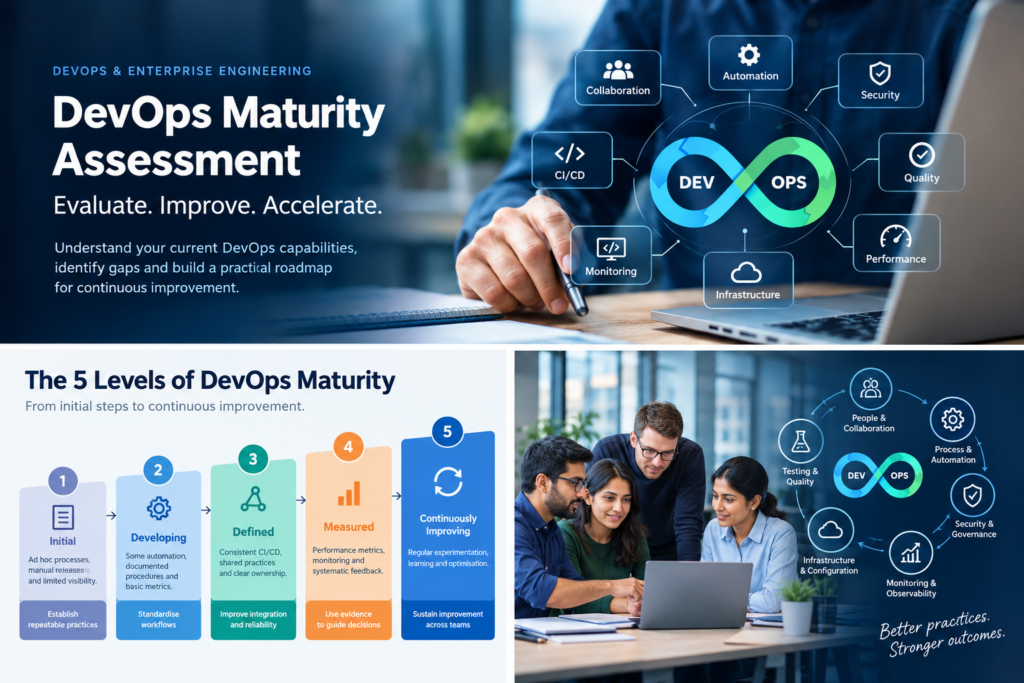
Initial architecture discovery and Maturity Compass assessments take 2 to 4 weeks. Designing, building, and integrating a production-ready, scalable test automation framework with pilot test suites typically takes 6 to 10 weeks.
Strategic Recommendation and Next Steps
Relying on ad-hoc test scripts, hardcoded test data, and disconnected testing tools creates high maintenance costs, frequent false failures, and slow software releases. To achieve continuous software delivery at enterprise scale, technology leaders must invest in solid test architecture engineering.
Test Automation Framework Development provides the foundation for sustainable quality engineering. By implementing modular Page Object Model designs, adopting modern tools like Playwright, separating test data with synthetic privacy generators, virtualizing external dependencies, and integrating containerized execution into CI/CD pipelines, organizations can scale automated testing effortlessly.
Sandhata Technologies brings over two decades of engineering excellence in quality architecture, test automation, and DevOps transformation across heavily regulated industries.
Contact Sandhata’s Quality Engineering Architects today to schedule your DevOps & SRE Maturity Compass Assessment and build a scalable, future-proof test automation framework.