Table of Contents
Quality Engineering Services UK | Enterprise Software Testing & Automation | Sandhata
However, delivering high-velocity software releases in the United Kingdom presents distinct challenges. UK enterprises operate under stringent regulatory standards enforced by the Financial Conduct Authority (FCA), the Prudential Regulation Authority (PRA), the UK General Data Protection Regulation (UK GDPR), and international mandates like the Digital Operational Resilience Act (DORA). Furthermore, enterprise IT infrastructures in major UK institutions rely on a complex hybrid mix of modern cloud microservices, legacy mainframes, and core payment networks (such as Bacs, CHAPS, and Faster Payments).
Traditional Quality Assurance (QA)—characterized by manual testing cycles, late-stage bug hunting, and brittle legacy test scripts—cannot support the speed of modern digital business. Manual QA introduces severe release bottlenecks, high execution costs, and inconsistent test coverage.
Quality Engineering Services UK resolves this friction. By shifting quality validation left into early development, migrating to modern test automation platforms like Playwright, virtualizing downstream legacy dependencies, and automating regulatory compliance checking, UK enterprises transform software quality from a release barrier into a continuous competitive advantage.
This comprehensive guide details the engineering methodologies, test automation frameworks, and compliance strategies that Sandhata Technologies delivers to help UK enterprises achieve high-velocity, resilient software delivery.
Section 1: The UK Enterprise Quality Landscape and Technical Obstacles
To implement Quality Engineering effectively within UK enterprise environments, engineering leaders must address specific technical and operational challenges.
1.1 The Limitations of Legacy Manual QA in the UK Enterprise
For years, UK enterprises managed software quality using centralized QA teams. Software development teams wrote code in sprints, accumulated changes into massive release candidates, and handed off artifacts to QA teams for manual regression testing.
This traditional approach introduces severe operational bottlenecks. Manual regression testing across complex enterprise applications takes weeks or months to complete. Because testing occurs late in the software lifecycle, finding and fixing architectural bugs requires expensive code rework. Furthermore, manual testing cannot achieve the comprehensive test coverage required for complex microservice environments.
1.2 Brittle Legacy Test Automation and High Maintenance Costs
Many UK organizations attempted to solve testing bottlenecks by building automated test suites using legacy automation tools like early-generation Selenium. Over time, these legacy test suites became brittle, slow, and prone to high rates of false-positive failures (test flakiness).
Engineering teams end up spending more time maintaining broken test scripts and investigating false alarms than building new business features. This high maintenance burden reduces trust in test automation, forcing organizations to fall back on manual testing.
1.3 UK Regulatory Governance and Data Protection Strictures
UK enterprises operate under intense regulatory scrutiny.
The Financial Conduct Authority and Prudential Regulation Authority require robust operational risk management, strict change controls, and documented audit evidence for all software deployments affecting financial services.
The UK General Data Protection Regulation and Data Protection Act 2018 enforce strict rules regarding customer data privacy. Using real customer data in lower non-production development or testing environments creates major compliance risks and potential regulatory fines.
The Digital Operational Resilience Act requires financial entities to demonstrate operational resilience, requiring comprehensive resilience testing, performance benchmarks, and automated security validation across digital channels.
Section 2: Core Pillars of Sandhata’s Quality Engineering Services in the UK
Sandhata Technologies, founded in London in 2005, delivers specialized Quality Engineering Services tailored specifically for complex UK enterprise environments. Sandhata combines modern test automation engineering, framework migration, Service Virtualization, and automated compliance governance into a unified quality strategy.
2.1 Pillar 1: Shift-Left Continuous Testing and Developer-Centric Automation
Sandhata transforms software quality by embedding test automation directly into developer workflows from the very beginning of the development process.
Rather than waiting for code to reach staging environments, automated unit tests, component tests, and API contract validations execute during developer code commits. By shifting quality validation left, software defects are caught instantly while developers are actively working on the code, reducing bug remediation costs by up to 100 times compared to late-stage QA fixes.
2.2 Pillar 2: Modern Test Automation Framework Migration (Playwright & Cypress)
To eliminate test flakiness and accelerate execution speeds, Sandhata specializes in migrating legacy, high-maintenance Selenium test suites to modern test automation frameworks like Playwright and Cypress.
Playwright offers native browser automation capabilities, automatic waiting mechanisms, parallel test execution, and superior handling of modern single-page applications. Sandhata constructs modular, maintainable Playwright automation architectures that integrate seamlessly into modern continuous integration pipelines, cutting regression execution times from days to minutes.
2.3 Pillar 3: Service Virtualization for UK Payment Networks and Core Systems
Testing UK enterprise applications often stalls when staging environments wait for physical access to unavailable third-party APIs, legacy mainframes, or core UK payment processing networks like Bacs, CHAPS, and Faster Payments.
Sandhata eliminates these testing delays using Service Virtualization. Service Virtualization simulates the behavior, transactional responses, and performance profiles of core backend mainframes and external banking networks. Engineering teams can execute thorough end-to-end integration and boundary testing continuously in lower environments without waiting for live target systems or risking real financial transactions.
2.4 Pillar 4: Synthetic Test Data Management and UK GDPR Compliance
Executing reliable automated tests requires realistic test data. However, copying production customer databases into non-production testing environments violates UK GDPR mandates.
Sandhata solves this challenge by delivering automated synthetic test data management frameworks. Sandhata implements automated data masking and synthetic data generation tools that create realistic test datasets mirroring production database structures without containing real personal identity details. Development and testing teams receive on-demand access to high-quality test data while ensuring complete data privacy compliance.
2.5 Pillar 5: Mainframe and Hybrid Stack Quality Engineering
Many UK retail banks, building societies, and insurance providers run core backend operations on legacy mainframes integrated with modern cloud microservices. Quality engineering must validate the entire hybrid stack.
Sandhata builds unified quality automation frameworks that test customer interactions seamlessly across mobile cloud applications, middleware integration layers, and core legacy mainframe ledgers. Modern automated pipeline runners execute backend COBOL validation checks alongside cloud API tests, guaranteeing system integrity across all architectural layers.
2.6 Pillar 6: Non-Functional Testing (NFT), Performance, and DevSecOps
Enterprise quality extends far beyond verifying functional business logic. Sandhata embeds comprehensive Non-Functional Testing (NFT) directly into continuous delivery pipelines.
Automated Performance and Load Testing evaluates application scalability, latency, and resource utilization under simulated peak traffic events, ensuring UK platforms handle high customer volumes without service degradation.
Automated Security Testing (DevSecOps) inspects source code, container layers, and open-source dependencies for security vulnerabilities during pipeline execution.
Automated Accessibility Testing validates compliance with Web Content Accessibility Guidelines (WCAG 2.1), ensuring digital services remain fully accessible to all users across the UK.
Section 3: Evaluating Quality Maturity with the DevOps & SRE Maturity Compass
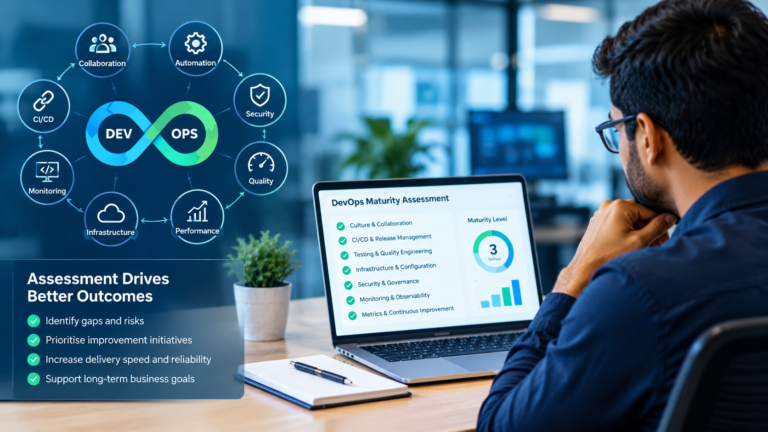
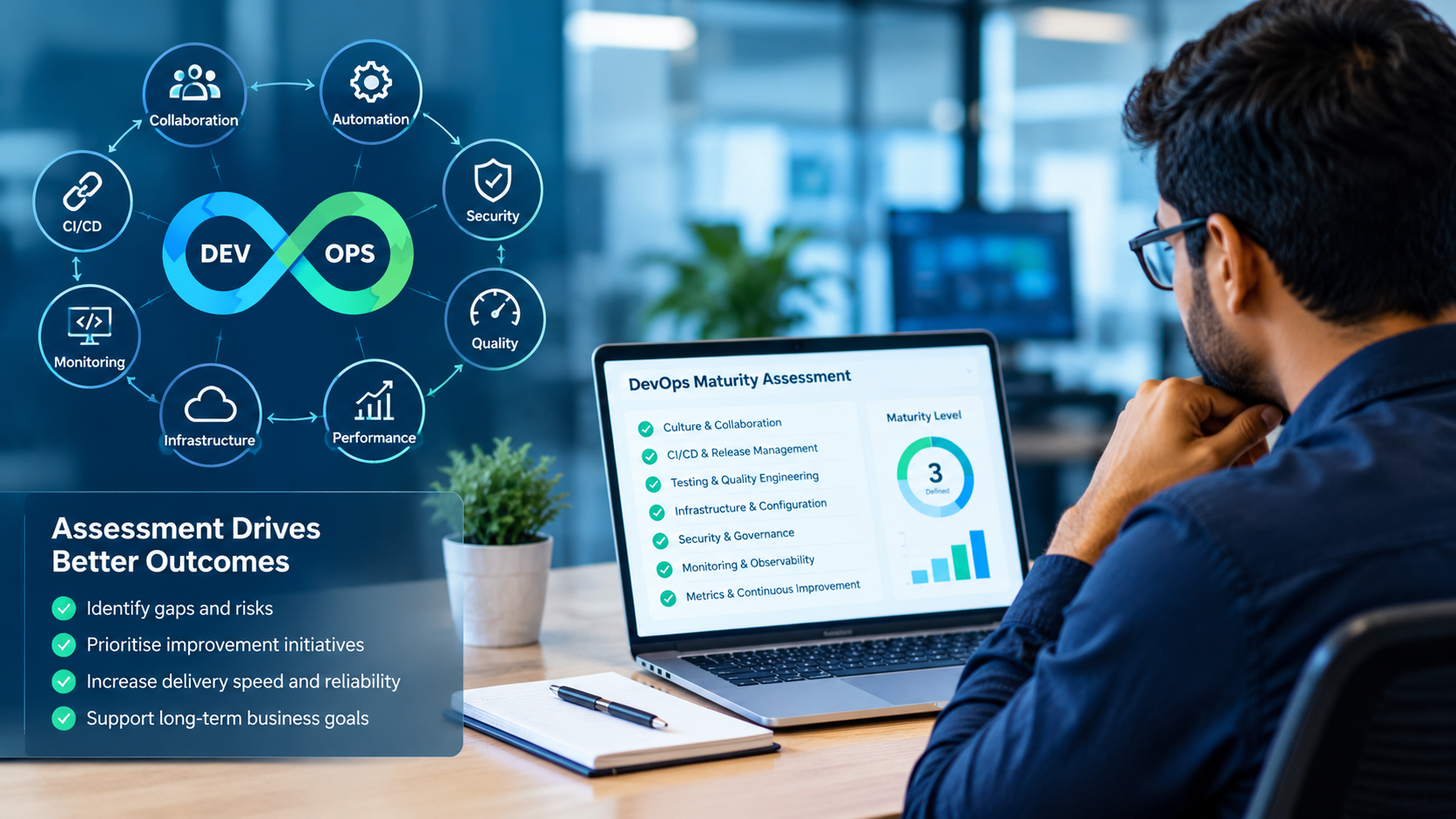
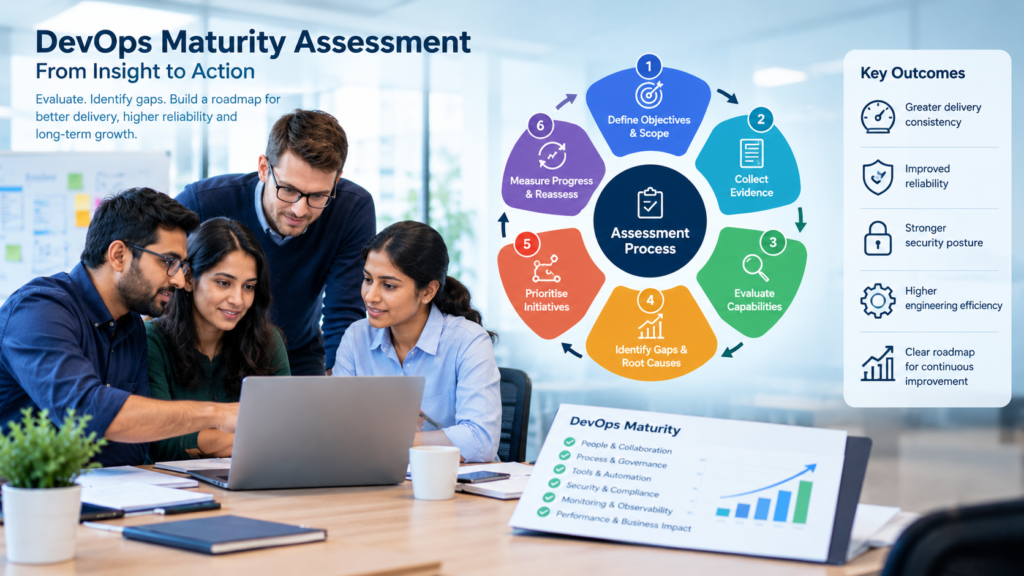
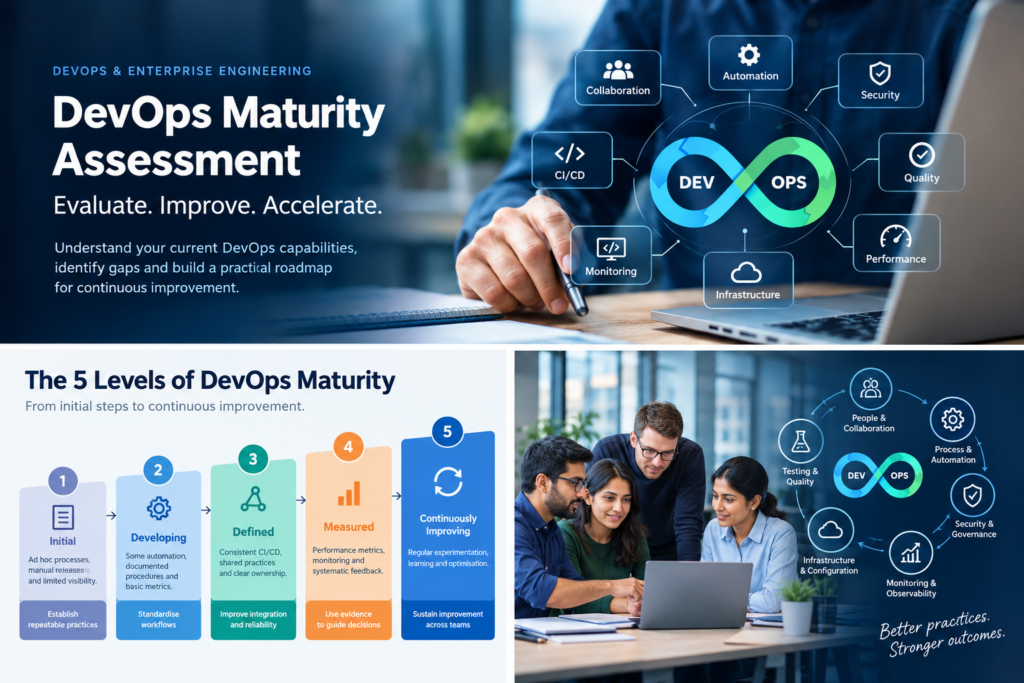
Sandhata applies the proprietary DevOps & SRE Maturity Compass to assist UK technology leaders in auditing their current software testing practices and building an actionable modernization strategy.
Level 1: Manual Ad-Hoc QA. Software testing relies almost entirely on manual regression execution. Test environments suffer from severe configuration drift, test data creation is manual, release lead times take months, and defect escape rates to production remain high.
Level 2: Fragmented Legacy Automation. Teams utilize legacy Selenium scripts for basic web testing, but scripts suffer from high flakiness and maintenance overhead. API testing, performance validation, and security checking remain manual, isolated activities.
Level 3: Integrated Continuous Quality Engineering. Automated test suites written in modern frameworks like Playwright execute automatically inside CI/CD pipelines. Service Virtualization eliminates environment dependencies, synthetic test data ensures UK GDPR compliance, and non-functional testing runs continuously.
Level 4: Hyperautomated Quality and Self-Healing Validation. AI-driven hyperautomation engines (powered by Sandhata’s ATOM2 platform) optimize test execution suites dynamically. Self-healing test scripts update automatically when minor UI changes occur, while real-time observability feedback loops drive continuous operational reliability.
The Maturity Compass provides UK enterprise leadership with absolute visibility into quality bottlenecks, compliance risks, and strategic investment priorities.
Section 4: UK Enterprise Impact – Real-World Case Studies
Case Study 1: Tier-1 UK Retail Bank Test Automation Modernization
A leading UK retail bank managed complex digital banking applications serving millions of UK customers. Legacy manual regression testing cycles for core online banking updates required 18 days across large testing teams, delaying digital feature rollouts and causing high release maintenance costs.
Sandhata deployed a dedicated team of UK Quality Engineering specialists to transform the bank’s quality strategy. Sandhata migrated brittle legacy test scripts to a high-speed Playwright test automation framework, implemented Service Virtualization for core UK payment APIs, and embedded automated synthetic data generation.
Regression testing execution time dropped by 92%, falling from 18 days down to under 14 hours. Defect escape rates to production fell by 80%, while deployment frequency increased from quarterly updates to bi-weekly releases with zero downtime.
Case Study 2: Major UK Telecommunications Operator Service Virtualization Rollout
A major UK telecommunications provider struggled with long testing delays when deploying updates to its customer management and billing systems. Development teams spent weeks waiting for access to shared staging environments and external supplier APIs.
Sandhata implemented an enterprise Service Virtualization and continuous quality engineering framework. Sandhata virtualized over 40 external supplier endpoints and automated API integration testing within unified continuous integration pipelines.
Environment wait time was reduced to zero, saving over 12,000 engineering hours annually. Testing execution cycles accelerated by 75%, allowing the provider to launch modern 5G customer service packages months ahead of competitors.
Section 5: Key Metrics for UK Quality Engineering Success
Evaluating the strategic impact of a Quality Engineering transformation requires tracking quantitative metrics across speed, software quality, efficiency, and compliance:
Defect Escape Rate: The percentage of software defects identified in production environments relative to total defects found during development. Modern QE keeps defect escape rates under 3%.
Automated Test Coverage: The percentage of functional requirements, API endpoints, and code paths validated by automated test suites, targeting over 85% coverage across core business journeys.
Regression Execution Duration: The total time required to execute a complete enterprise regression test suite. High-performing Playwright automation reduces regression execution from weeks to hours.
Lead Time for Quality: The time elapsed from code commit to complete automated quality validation, including functional, performance, and security checks.
Test Flakiness Rate: The percentage of test failures caused by script instability or environment timing issues rather than genuine software bugs, targeted below 1%.
UK GDPR Compliance Rate: Verifying that 100% of non-production testing environments utilize fully masked or synthetic datasets.
Section 6: Frequently Asked Questions (FAQs)
FAQ 1: What are Quality Engineering Services UK?
Quality Engineering Services UK are enterprise advisory and technical engineering solutions that modernise software testing across UK organizations. Moving beyond traditional manual QA, Quality Engineering embeds automated testing, shift-left validation, performance engineering, and regulatory compliance directly into CI/CD pipelines.
FAQ 2: How does Quality Engineering differ from traditional Quality Assurance (QA)?
Traditional QA focuses on manual bug detection late in the software lifecycle. Quality Engineering integrates automated testing, performance validation, security checks, and continuous feedback directly into developer workflows from the moment code is written.
FAQ 3: How do Sandhata’s UK Quality Engineering Services ensure FCA and PRA regulatory compliance?
Sandhata embeds Policy as Code, automated audit logging, synthetic test data generation, and security scanning into release pipelines, ensuring UK financial institutions meet Financial Conduct Authority (FCA), Prudential Regulation Authority (PRA), and DORA requirements automatically.
FAQ 4: Why are UK enterprises migrating from legacy Selenium to Playwright for test automation?
Playwright offers faster execution speeds, native multi-browser support, built-in auto-waiting mechanisms, and superior reliability for modern single-page web applications, reducing test flakiness and execution maintenance costs compared to legacy Selenium setups.
FAQ 5: What role does Service Virtualization play in UK enterprise Quality Engineering?
Service Virtualization simulates complex UK payment endpoints (such as Bacs, CHAPS, and Faster Payments), mainframes, and third-party APIs, enabling continuous automated testing without depending on live backend environments or risking real transactional data.
FAQ 6: How does Sandhata handle UK GDPR compliance in test data management?
Sandhata implements automated data masking and synthetic data generation tools, ensuring non-production development and testing environments operate with realistic test datasets that contain zero personally identifiable information (PII).
FAQ 7: Can Quality Engineering be applied to legacy mainframes alongside cloud platforms?
Yes. Sandhata specializes in hybrid stack quality engineering, building automated testing interfaces that validate legacy mainframe COBOL backend logic simultaneously with modern cloud microservices and mobile frontend applications.
FAQ 8: What metrics are used to measure the success of Quality Engineering Services in the UK?
Key metrics include Defect Escape Rate, Automated Test Coverage, Regression Execution Duration, Lead Time for Quality, and Change Failure Rate.
FAQ 9: How does shift-left testing lower overall software development costs?
Detecting software defects early during unit or integration testing is up to 100 times cheaper than fixing bugs caught during production outages or late manual QA regression cycles.
FAQ 10: How does Sandhata assess an enterprise’s current testing maturity in the UK?
Sandhata applies the proprietary DevOps & SRE Maturity Compass, evaluating corporate quality practices across 30 to 40 measurement criteria to identify test bottlenecks, flakiness, environment dependencies, and compliance risks.
FAQ 11: What is Non-Functional Testing (NFT) in enterprise Quality Engineering?
Non-Functional Testing evaluates performance, load scalability, stress resilience, application security, and accessibility (WCAG compliance), ensuring enterprise platforms remain stable, fast, and compliant under peak user volumes.
FAQ 12: How does hyperautomation and Sandhata’s ATOM2 platform accelerate UK Quality Engineering?
Sandhata’s ATOM2 platform delivers low-code and no-code automation capabilities that streamline test orchestration, automate multi-system validation, and accelerate test suite execution across complex enterprise toolchains.
FAQ 13: How does Quality Engineering support UK Open Banking and PSD2 initiatives?
Sandhata automates contract testing, security verification, and performance benchmarks for Open Banking APIs, enabling UK banks to deliver secure, compliant financial services to third-party providers rapidly.
FAQ 14: Where is Sandhata Technologies based in the UK?
Sandhata Technologies was founded in London in 2005. Its UK headquarters are located at 5th Floor, 1 Keybridge Drive, London, SW8 1NN.
FAQ 15: How long does it take to implement a Quality Engineering transformation with Sandhata in the UK?
Initial maturity audits using the Maturity Compass take 2 to 4 weeks. Core test framework automation, Playwright migration, and pilot pipeline integrations deliver initial operational results within 8 to 12 weeks.
Strategic Recommendation and Next Steps
Relying on legacy manual QA, slow regression cycles, brittle test automation, and unmasked test data exposes UK enterprises to severe operational risk, high costs, and competitive disadvantage. To lead in today’s digital UK economy, technology leaders must elevate software quality into an automated, continuous, and strategic engineering discipline.
Quality Engineering Services UK provides a clear blueprint for enterprise transformation. By shifting quality validation left, migrating to modern automation frameworks like Playwright, virtualizing core legacy dependencies, generating synthetic UK GDPR compliant data, and automating regulatory compliance, UK enterprises can release software rapidly with total confidence.
Sandhata Technologies brings over two decades of engineering excellence serving UK banks, telecommunications leaders, and insurance institutions from its London headquarters.
Contact Sandhata’s UK Quality Engineering Specialists today at their London office (+44-20-3885-0366) to schedule your DevOps & SRE Maturity Compass Assessment and modernise your enterprise testing capabilities.