Table of Contents
Old Bathroom Restoration Hyderabad | Structural & Plumbing Overhauls
Hyderabad’s real estate fabric is rich with history, showcasing a blend of traditional architecture and mid-century urban development. Across classic residential hubs like Secunderabad, Begumpet, West Marredpally, Himayatnagar, Abids, Basheerbagh, Padmarao Nagar, and early layouts in Banjara Hills and Jubilee Hills, thousands of homes and independent flats feature bathrooms constructed 20 to 50 years ago.
While these structures were built with robust brickwork and heavy concrete slabs, their internal MEP (Mechanical, Electrical, Plumbing) systems and subfloor waterproofing have long passed their operational lifespans.
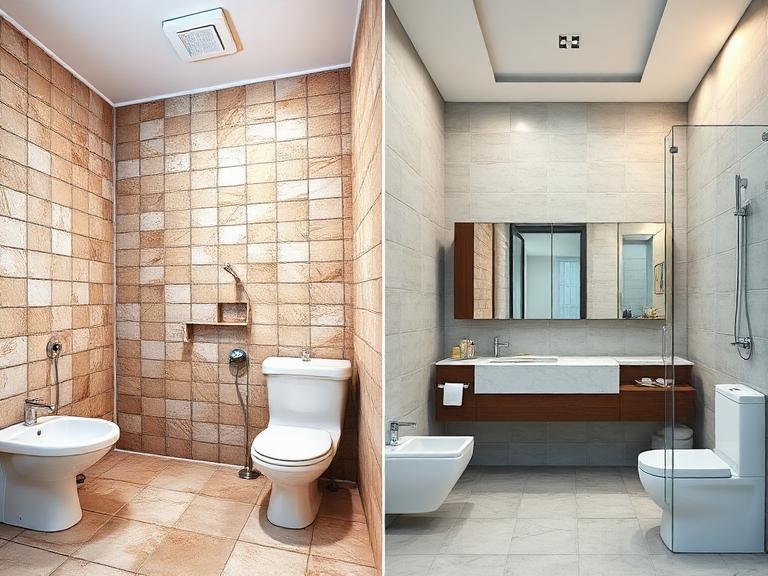
Executing a professional Old Bathroom Restoration Hyderabad project involves much more than cosmetic updates or sticking new tiles over old walls. Legacy bathrooms present unique civil engineering challenges: severely corroded Galvanized Iron (GI) supply lines, cracked cast-iron soil stacks, saturated lime-cement subfloor mortar, rusted slab reinforcement bars (rebar), outdated Indian squatting WCs, and persistent salt efflorescence destroying adjoining room walls.
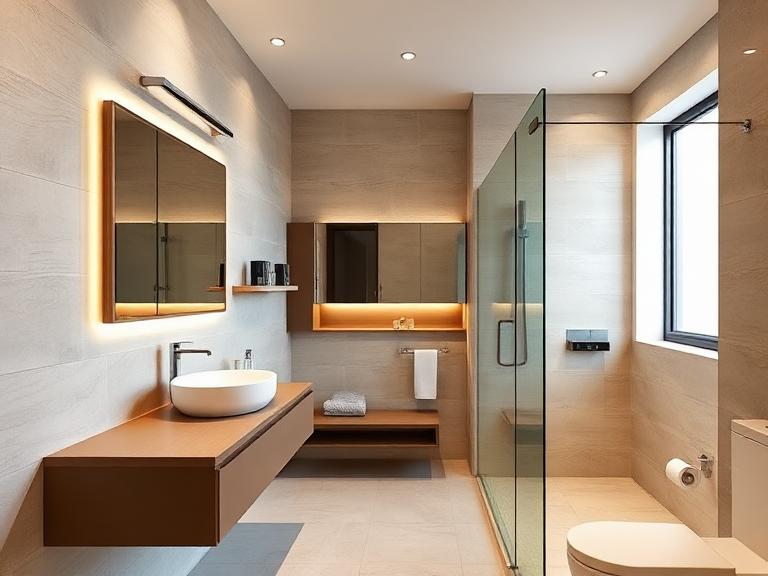
Restoring an aging bathroom requires a complete structural overhaul. This process includes extracting obsolete metal pipes, repairing concrete slabs, applying 7-layer elastomeric waterproofing membranes, converting legacy floor layouts into ergonomic modern spaces, and installing anti-scaling finishes that withstand Hyderabad’s groundwater conditions.
This guide details the civil engineering principles, material standards, step-by-step restoration workflows, itemized cost estimates, and structural safety procedures required to transform aging washrooms into modern, durable spaces.
The Hidden Engineering Challenges in Aging Hyderabad Bathrooms
Understanding the hidden structural and plumbing issues inside older washrooms is essential before commencing demolition work:
1. Galvanized Iron (GI) Pipe Corrosion & Tuberculation
In properties built before the mid-2000s, water supply networks relied on Galvanized Iron (GI) pipes embedded directly inside brick walls without protective conduits. Over 15 to 25 years, exposure to minerals in Hyderabad groundwater causes severe internal corrosion and tuberculation. Rust builds up inside the pipes, restricting water flow to a trickle, shedding brown rust flakes into tap water, and creating hidden pinhole leaks inside wall masonry.
2. Concrete Slab Spalling & Rebar Oxidation
Decades of subsurface water pooling inside un-waterproofed sunken slabs allows moisture to penetrate structural concrete. Trapped water reaches the underlying steel reinforcement bars, causing iron oxidation (rusting). As rust expands, it exerts internal pressure on the concrete, causing it to crack and spall. Left unchecked, this weakens the floor slab’s structural load capacity and damages the ceiling of the apartment below.
3. Saturated Mortar Beds & Capillary Rising Damp
Legacy construction techniques used thick beds of un-waterproofed sand-lime-cement mortar beneath floor tiles. When surface cement grout lines deteriorate, bath water soaks into this subfloor mortar. The mortar acts like a sponge, holding moisture that travels horizontally into adjoining bedroom and hallway walls via capillary action. This dissolves mineral salts inside the red brickwork, pushing off interior paint as white chalky powder (efflorescence).
4. Cast Iron Waste Line Deterioration
Older soil and waste stacks utilized heavy cast iron pipes joined with molten lead or hemp packing. Over time, sewer gases corrode the internal pipe walls, while joint packing degrades. This allows foul odors, waste moisture, and sewer flies to enter living spaces.
Technical Comparison: Legacy Engineering vs. Modern Restoration Standards
Restoring an old bathroom involves replacing outdated civil practices with high-performance modern building standards:
| Technical Parameter | Legacy Construction (20+ Years Old) | Modern Engineering Restoration Standard |
| Water Supply Piping | Concealed Galvanized Iron (GI) metal pipes; prone to internal rusting & leaks | SDR-11 CPVC / Flexible PEX manifold systems; zero corrosion & smooth bore |
| Drainage Stacks | Cast iron pipes with lead joints; heavy, scale-prone, and leak-susceptible | Heavy-duty SWR PVC with rubber ring joints & 50mm deep anti-foul water seals |
| Subfloor Waterproofing | Basic single-coat neat cement wash or coal tar paper; fails after 5-8 years | 7-Layer elastomeric polymer membrane with glass fiber mesh & 72-hr flood testing |
| Tile Setting Method | Thick sand-cement mortar bed; prone to air voids and tile debonding | High-flex polymer-modified tile adhesives (Type-2/Type-3); zero hollow spots |
| Tile Joint Sealing | Standard porous white cement grout; absorbs water, turns yellow, and breeds mold | Two-part non-porous resin epoxy grout; 100% waterproof, stain-proof, and hygienic |
| Toilet Configuration | High raised brick platform for Indian squatting WC; heavy structural dead load | Flush floor screed with in-wall steel mounting frame for Western wall-hung WC |
The 7-Layer Subfloor & Concrete Slab Restoration Architecture
Subfloor restoration requires structural remediation followed by a flexible elastomeric waterproofing membrane engineered to isolate concrete slabs from future moisture exposure:
- Concrete Slab Scarification & Rebar Treatment: The bare concrete slab is scarified clean of old mortar bed residue. Exposed, rusted rebar is mechanically wire-brushed, treated with a zinc-rich anti-corrosion primer, and covered with polymer micro-concrete.
- Polymer Mortar Corner Coving: Polymer-modified mortar coves (2×2 inches) are applied along all 90-degree floor-to-wall perimeters to prevent stress cracking.
- First Elastomeric Slurry Coat: A thick slurry coat of polymer-modified cementitious membrane is applied across the prepared concrete slab.
- Glass Fiber Mesh Reinforcement: Alkali-resistant glass fiber mesh (145 GSM) is embedded into the wet first coat along wall-floor perimeters and around drain openings.
- Second Elastomeric Slurry Coat: A cross-directional second coat is applied, extending 7 feet up shower walls to seal against moisture ingress through tile joints.
- Sloped Screed Base: Screed concrete mixed with liquid waterproofing compound is laid at a precise 1:100 fall gradient toward point or linear trench drains.
- Mandatory 72-Hour Standing Water Pond Test: The floor basin is flooded with 6 inches of standing water for 72 continuous hours. Engineers verify zero water level drop and confirm lower-floor ceilings remain dry before tiling begins.
Step-by-Step Execution Workflow for Old Bathroom Restorations
Restoring an aging bathroom in an occupied or legacy home follows a systematic execution schedule across multiple engineering disciplines:
1.1. Structural Survey, Zipper Wall Isolation & Fixture Removal:Phase 1: Structural Audit & Containment.
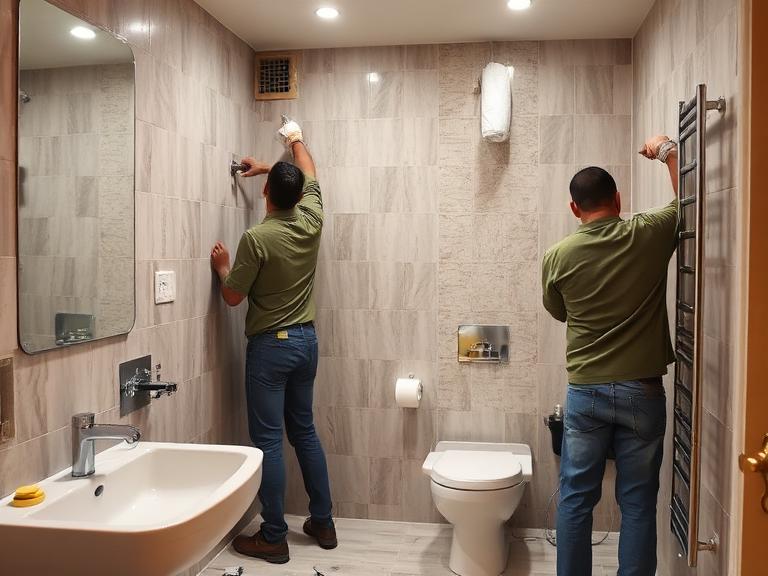
Engineers conduct a structural assessment, test concrete slab soundness, and map utility stacks. Heavy plastic dust curtains isolate the work area, protective floor sheets shield access hallways, and old sanitaryware, rusted taps, and overhead tanks are removed.
2.2. Stripping Old Tiles, Mortar & GI Pipe Extraction:Phase 2: Controlled Civil Demolition.
Workers carefully strip old ceramic tiles and saturated subfloor mortar down to the bare concrete slab using low-vibration chisels. Embedded GI supply lines and legacy cast iron drain pipes are extracted from wall channels.
3.3. Slab Scarification, Micro-Concrete Repair & Coving:Phase 3: Concrete Remediation & Rebar Repair.
Exposed base concrete is cleaned and scarified. Rusted steel rebar is treated with zinc-rich anti-corrosion coatings, micro-cracks are injected with polymer grout, and 2×2 inch polymer mortar coves are formed along floor-to-wall joints.
4.4. CPVC/PEX Manifold Rework & Concealed Tank Framing:Phase 4: Modern MEP Piping Installation.
Wall channels are cut to install SDR-11 CPVC or flexible PEX supply manifolds, heavy-duty uPVC SWR drain lines, concealed thermostatic diverter valves, wall-hung WC steel mounting frames, and IP65 electrical conduits.
5.5. 7-Layer Elastomeric Waterproofing & Pond Testing:Phase 5: Waterproofing & 72-Hour Flood Testing.
Dual coats of elastomeric polymer slurry are applied over the slab and shower walls, reinforced with fiberglass mesh. The basin is flooded with water for 72 continuous hours to certify a 100% leak-proof seal.
6.6. Efflorescence Neutralization & Crystalline Treatment:Phase 6: Adjoining Wall Masonry Remediation.
Damaged plaster on adjoining bedroom walls is chipped down to bare red brick, wire-brushed, treated with an acid-free salt neutralizer, coated with crystalline waterproofing slurry, and re-plastered with polymer mortar.
7.7. Sloped Screed Base, Vitrified Tiling & Epoxy Grouting:Phase 7: Screed Engineering, Tiling & Grouting.
Screed concrete is laid at a 1:100 fall gradient toward drains. Large-format vitrified wall slabs and anti-skid floor tiles are set using high-flex polymer adhesives. Seams are sealed with non-porous two-part resin epoxy grout.
8.8. False Ceiling, WPC Vanity, Fixture Fitment & Handover:Phase 8: Assembly & Final Commissioning.
Moisture-resistant calcium silicate false ceilings are installed with warm LED lighting. Custom 100% waterproof WPC vanities, quartz tops, glass partitions, and branded sanitaryware are fitted. Piping undergoes a 5-bar pressure test before final project handover.
Indian-to-Western WC Conversion Engineering
Converting an old elevated Indian squatting toilet (Orissa Pan) to a sleek Western wall-hung WC is a standard requirement during old bathroom restorations. This process involves specific structural adjustments:
Material Specifications for Restoring Old Bathrooms in Hyderabad
Selecting durable, high-performance materials prevents premature wear caused by age, humidity, and hard water:
| Component Category | Modern Specification Standard | Materials to Avoid in Restoration |
| Water Supply Lines | SDR-11 CPVC (Astral/Ashirvad) or Flexible PEX manifolds | GI metal pipes or thin-wall PVC plumbing |
| Drainage Piping | Heavy-Duty SWR PVC with rubber ring joints & deep P-traps | Standard thin-wall un-plasticized PVC pipes |
| Vanity Core Cabinetry | 100% Waterproof WPC Board or BWP Grade 710 Marine Ply | Commercial MDF, Particle Board, or HDMR |
| Countertop Surfaces | Engineered Quartz Stone or Sintered Porcelain Slabs | Porous unsealed natural marble or soft limestone |
| Faucets & Fittings | Physical Vapor Deposition (PVD) Brushed Gold/Gunmetal | Standard chrome-plated fittings (scale easily) |
| Tile Joint Sealing | Two-Part Resin Epoxy Grout (Non-Porous & Waterproof) | White cement grout (crumbles and stains) |
| False Ceiling Grid | Moisture-Resistant Calcium Silicate Board | Standard untreated Gypsum boards |
Cost Breakdown for Old Bathroom Restoration in Hyderabad (2026 Price Index)
Restoring an old bathroom involves extensive civil, structural, and plumbing remediation. Below is an itemized cost estimate based on current material and engineering rates in Hyderabad:
A. Restoration Cost Spectrum Tiers
| Restoration Tier | Investment Range (Per Bath) | Included Structural & Civil Scope |
| Standard Apartment Restoration | ₹1,25,000 – ₹2,10,000 | Full GI pipe removal, slab scarification, 7-layer waterproofing, 4x2ft vitrified tiles, Indian to Western WC conversion, Jaquar/Cera fittings. |
| Premium Legacy Home Overhaul | ₹2,20,000 – ₹3,80,000 | Deep slab rebar treatment, PEX manifold piping, 6x4ft vitrified slabs, Kohler/Grohe thermostatic fittings, custom WPC vanity, glass cubicle. |
| Heritage Villa Restoration | ₹3,90,000 – ₹6,50,000+ | Structural micro-concrete jacketing, sintered porcelain slabs, concealed digital thermostatic panels, smart WC, freestanding tub, custom steam. |
B. Detailed Line-Item Estimate for a Standard 50 sq. ft. Legacy Bathroom
| Restoration Scope Item | Estimated Investment Range (₹) |
| Site Protection, Zipper Containment & Civil Demolition | ₹16,000 – ₹28,000 |
| Saturated Mortar Excavation & GI Pipe Extraction | ₹12,000 – ₹20,000 |
| Concrete Slab Scarification & Zinc Rebar Remediation | ₹10,000 – ₹18,000 |
| Bagged Debris Transport to GHMC C&D Recycling Plant | ₹5,500 – ₹9,500 |
| 7-Layer Elastomeric Waterproofing & 72-Hr Pond Testing | ₹15,000 – ₹24,000 |
| CPVC Supply Manifolds & Heavy SWR PVC Drain Rework | ₹35,000 – ₹58,000 |
| Indian-to-Western WC Conversion & Steel Concealed Tank | ₹22,000 – ₹38,000 |
| Wall Vitrified Slabs & Floor Anti-Skid Tiles (50 sq. ft.) | ₹35,000 – ₹75,000 ($70-150/\text{sq.ft}$) |
| Polymer Tile Adhesive, Epoxy Grouting & Masonry Labor | ₹18,000 – ₹28,000 |
| Electrical Rewiring, IP65 Conduits & Exhaust Fitting | ₹8,500 – ₹15,500 |
| Sanitaryware, PVD Brassware & Thermostatic Diverter | ₹42,000 – ₹1,10,000 |
| Custom 100% Waterproof WPC Vanity & Quartz Countertop | ₹22,000 – ₹48,000 |
| Glass Partition & Calcium Silicate False Ceiling | ₹18,000 – ₹35,000 |
| Total Estimated Investment | ₹2,59,000 – ₹5,07,000 + GST |
Frequently Asked Questions (15 FAQs)
Q1: How much does old bathroom restoration cost in Hyderabad?
Answer: Restoring an old or legacy bathroom in Hyderabad typically costs between ₹1,25,000 to ₹2,10,000 for standard 15 to 30-year-old apartment bathrooms requiring complete pipe overhauls, slab repair, and new finishes; and ₹2,25,000 to ₹4,50,000+ for heritage bungalows or luxury retrofits requiring heavy structural concrete jacket repairs, imported porcelain slabs, and premium concealed fittings.
Q2: Why must Galvanized Iron (GI) pipes be completely replaced during old bathroom restoration?
Answer: Galvanized Iron (GI) pipes installed in older Hyderabad homes over 15 to 20 years ago rust internally. This corrosion restricts water flow, reduces pressure, sheds toxic rust flakes into tap water, and develops microscopic pinhole leaks inside walls that ruin plaster and paintwork.
Q3: How long does a complete old bathroom restoration take?
Answer: A full structural restoration of an old bathroom takes between 16 to 24 working days on-site. The process involves structural concrete slab repair, chipping old lime/cement mortar beds, GI pipe extraction, 7-layer elastomeric waterproofing, a mandatory 72-hour flood test, new wall/floor tiling, and sanitaryware commissioning.
Q4: Can an old Indian squatting toilet be converted into a modern Western wall-hung WC?
Answer: Yes. Restoration specialists demolish the raised brick platform of the Indian WC, re-engineer the soil drain stack angle using 45-degree swept bends, anchor an in-wall concealed flush cistern frame into the masonry, level and waterproof the floor slab, and mount a Western wall-hung WC.
Q5: What happens when structural concrete rebar inside an old sunken slab is rusted?
Answer: When prolonged seepage rusts the steel rebar inside the concrete slab, engineers perform structural concrete remediation. Rust is mechanically scraped off, rebar is treated with zinc-rich anti-corrosion primers, and structural polymer-modified micro-concrete is injected to restore load-bearing capacity before waterproofing.
Q6: How do you handle old cast iron soil and waste drain pipes during restoration?
Answer: Old cast iron drain pipes develop thick interior rust scaling and cracked lead-sealed joints that cause persistent sewer odors. We extract old cast iron lines and replace them with anti-fungal, UV-stabilized heavy-duty SWR PVC pipes fitted with 50mm deep-seal anti-foul water traps.
Q7: How do you protect lower-floor ceilings during old bathroom restoration in apartments?
Answer: We utilize low-vibration electric chisels to avoid jarring fragile concrete slabs in older buildings. Before laying new floor screeds, we apply a 7-layer elastomeric waterproofing membrane and certify a mandatory 72-hour standing water pond test to ensure zero water drop to lower units.
Q8: Why is epoxy grout mandatory when restoring old bathroom floor and wall tiles?
Answer: Older bathrooms used cement grout which crumbles and absorbs water over time. Two-part resin epoxy grout is 100% non-porous, waterproof, stain-proof, and immune to hard water mineral scale, protecting the newly restored subfloor from future moisture ingress.
Q9: How is heavy civil demolition waste managed in older Hyderabad localities?
Answer: Rubble, old lime mortar, and extracted pipes are packed into heavy-duty sacks inside the work zone, lowered cleanly, and transported daily using commercial vehicles to GHMC-authorized Construction & Demolition (C&D) recycling plants in Jeedimetla or Fathullaguda.
Q10: What materials are used for vanity cabinetry to withstand high humidity in old bathrooms?
Answer: We strictly install 100% waterproof Wood Polymer Composite (WPC) boards or BWP Grade 710 marine plywood paired with quartz stone tops. Avoid commercial MDF or particle board which swell and rot when exposed to damp environments.
Q11: How do you control construction dust when restoring a bathroom in an occupied old home?
Answer: We isolate the work zone using floor-to-ceiling zippered plastic dust curtains, line access hallways with corrugated protection sheets, deploy dust-extracted diamond tile cutters, and execute daily end-of-shift site cleanups.
Q12: Can low water shower pressure in an old home be fixed during restoration?
Answer: Yes. Low pressure in older homes is caused by narrow, corroded 1/2-inch GI pipes. During restoration, we replace them with 1-inch or 3/4-inch smooth-bore CPVC/PEX manifold supply lines, eliminate sharp 90-degree elbows, or install an inline pressure booster pump system.
Q13: Do old bathroom restorations require structural permits or approvals?
Answer: Internal non-structural plumbing overhauls do not require municipal building permits. However, in apartment complexes, we coordinate with Resident Welfare Associations (RWAs) for work timings, worker passes, and common area floor protection.
Q14: How do you handle salt efflorescence on walls adjacent to old bathrooms?
Answer: Damaged plaster on adjoining walls is chipped down to bare brick, treated with an acid-free salt-neutralizing chemical wash, coated with a crystalline waterproofing slurry, and re-plastered with polymer-modified mortar before painting.
Q15: What warranties are provided on old bathroom structural restorations in Hyderabad?
Answer: We provide a written 10-year anti-leakage warranty on subfloor waterproofing, a 5-year warranty on structural concrete remediation, and a 2-year service warranty on concealed plumbing installations.