


Table of Contents
Why Many Hyderabad Websites Fail to Rank on Google
The Invisible Barriers to Ranking in Hyderabad
Many websites in Hyderabad fail to rank on Google not because of a lack of effort, but due to a misalignment between local business practices and global search algorithms. In a hyper-competitive market like Hyderabad—where tech-savvy consumers in HITEC City rub shoulders with traditional markets in Abids—the “digital divide” is often caused by outdated technical structures, a lack of hyper-local relevance, and poor mobile optimization.
Search engines in 2026 have moved beyond simple keyword matching. They now prioritize “Entity Authority” and “User Experience Signals.” Many local websites struggle because they treat SEO as a one-time setup rather than a dynamic technical requirement. Common culprits include slow server response times on local networks, inconsistent NAP (Name, Address, Phone) data across regional directories, and content that fails to satisfy the specific search intent of the Hyderabad demographic. To succeed, a website must bridge the gap between being a “business in Hyderabad” and being a “verified authority for Hyderabad users.”
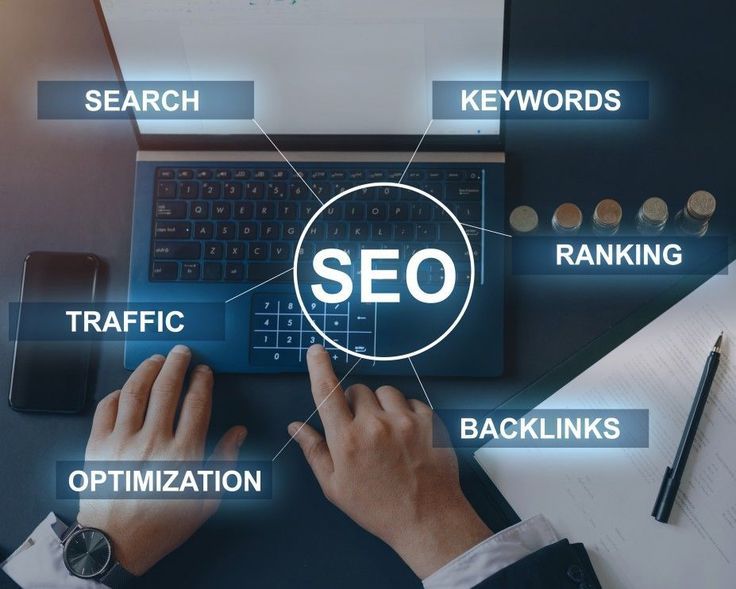
What is Search Ranking Failure?
Search ranking failure occurs when a website is technically indexed by search engines but fails to appear in the top positions for relevant, high-intent queries. In the context of a regional hub like Hyderabad, this failure often manifests as being invisible in the “Google Map Pack” or falling behind competitors in organic results despite having a physically superior business.
Snippet-Ready Definition of Ranking Failure:
Ranking failure is the inability of a domain to demonstrate sufficient Relevance, Authority, and Trust (E-E-A-T) to satisfy an algorithm’s requirements for a specific geographic location. In Hyderabad, this is frequently driven by technical debt, “zombie” content, and a failure to optimize for the mobile-first behavior of the local population.
Why It Matters: The Business Impact of Invisibility
For a business in Telangana’s capital, search visibility is the primary driver of the “Discovery-to-Conversion” pipeline. When a website fails to rank, the business suffers in three critical areas:
- High Customer Acquisition Costs (CAC): Without organic traffic, businesses are forced to rely solely on expensive paid ads (PPC). In competitive sectors like real estate or IT services in Hyderabad, this can drain budgets without building long-term equity.
- Loss of Local Trust: Modern consumers use Google to “vet” businesses. If your showroom in Jubilee Hills doesn’t appear when searched, potential clients often perceive the business as less established or unreliable.
- Market Share Erosion: Every day a website remains on page two is a day a competitor captures the intent of a ready-to-buy customer. In a fast-growing city, this lead gap becomes harder to close over time.
How it Works: The Mechanics of Ranking Failure
Understanding why a site fails requires looking at the search process as a three-stage mechanical flow. If any stage is broken, the entire ranking potential collapses.
1. The Crawl and Index Gap
Search bots must be able to navigate your site easily. Many local sites use heavy JavaScript or unoptimized images that block “Googlebot.” If the bot cannot efficiently “read” your site’s structure, it won’t index your important pages.
2. The Semantic Misalignment
Google uses Natural Language Processing (NLP) to understand what a page is about. Many websites fail because they use generic language. For example, a “Boutique in Hyderabad” might fail because it doesn’t mention specific neighborhoods (like Banjara Hills) or localized styles that searchers actually use.
3. The Authority Deficit
Google looks for “signals” from the rest of the web. If no other reputable Hyderabad-based websites or news outlets link to your site, Google lacks the “social proof” needed to rank you above established competitors.

Variations of Ranking Issues
Ranking failures are not universal; they often fall into specific categories based on the business model:
- The “Map Pack” Failure: The business appears in organic links but is nowhere to be found on Google Maps. This is usually due to inconsistent local citations.
- The “National vs. Local” Conflict: A site ranks for broad terms in India but fails to show up when someone in Secunderabad searches for their specific service.
- The “Mobile-Only” Drop: The site ranks well on desktops but disappears on smartphones—a fatal error in a city with over 80% mobile search penetration.
Benefits of Solving Ranking Failures
Correcting these issues leads to a “Compound Growth” effect:
- Increased Footfall: Direct integration between search results and physical visits via Google Maps.
- Higher Conversion Rates: Organic traffic usually carries higher intent than social media traffic.
- Sustainability: Once a site gains authority, it requires less financial maintenance to stay at the top compared to paid advertising.
Common Mistakes and Misconceptions
Many Hyderabad business owners fall into these strategic traps:
- The “Keyword Stuffing” Myth: Believing that repeating “Best Hospital in Hyderabad” 50 times will help. Modern AI algorithms penalize this as “over-optimization.”
- Ignoring Technical Speed: With the rise of 5G, users expect a site to load in under 2 seconds. A 5-second load time is the most common reason for ranking drops in 2026.
- Broken Redirects: Many businesses change their website design but forget to map the old links to the new ones, leading to “404 Error” graveyards that kill rankings.
- Buying Low-Quality Links: Purchasing “SEO Packages” that provide 1,000 links for a small fee. These are often recognized as spam, leading to manual penalties.
Practical Insights: Real-World Case Signals
Consider a real-world scenario of a dental clinic in Kondapur. Despite having a modern website, they weren’t ranking for “dentist near me.”
The Diagnostic Insight: The audit revealed that their “Google Business Profile” was registered with an old phone number, while the website had a new one. Furthermore, their website was hosted on a slow, distant server, leading to high “Latency” for local users.
The Outcome: By moving to a local CDN (Content Delivery Network), unifying their contact data (NAP), and creating content around “Emergency Dental Care in Kondapur,” they moved from page four to the top three in just 90 days. This proves that ranking isn’t about “tricking” Google, but about providing the most frictionless experience for the local user.
FAQs
1. Why does my competitor rank higher with a worse website? Ranking is based on hundreds of factors, including “Domain Age” and “Backlink Profile.” A competitor might have a dated design but high “Trust Equity” built over several years of consistent local citations.
2. How long does it take to fix ranking issues in Hyderabad? Technical fixes (like speed) show results in 2–4 weeks. Content and authority building usually take 3–6 months to reflect significant movement in the Hyderabad market.
3. Does social media help my Google rankings? Social media does not directly improve rankings, but it drives traffic and brand mentions, which are secondary signals that help Google recognize your business as a popular “Entity.”
4. Why am I ranking in Secunderabad but not in Gachibowli? Google Maps is highly proximity-based. If your physical address is in Secunderabad, you will naturally rank higher there. To rank in Gachibowli, you need “Service Area” optimization and localized landing pages.
5. Is AI-generated content bad for SEO? Only if it is unedited and low-value. If AI content is used to provide factual, helpful, and localized information that is vetted by a human, it can rank quite well.
6. What is the most important ranking factor for Hyderabad businesses? In 2026, it is “Local Relevance.” This means having a verified Google Business Profile, local reviews, and content that mentions local landmarks and neighborhood-specific context.

Conclusion: Reclaiming Your Digital Real Estate
A failure to rank on Google is rarely a permanent condition; it is a diagnostic signal that your digital infrastructure is out of sync with your physical business’s value. In a city as dynamic as Hyderabad, your website must be as fast, reliable, and “connected” as the city itself. By auditing your technical foundations, aligning your content with local intent, and maintaining data consistency, you can transform your website from a hidden link into a dominant local authority.